



Nintendo - Tested in 2026 by der spirit
 There are video games whose stories began with a massive uproar even before their actual release. When The Legend of Zelda: The Wind Waker launched in 2002, it faced an incredibly uphill battle from the start.
The fanbase was deeply divided, and many judged what they saw far more harshly than the game deserved. The reason? Just a few years earlier, Nintendo had showcased a tech demo at Space World: a dark, ultra-realistic Zelda title that moved in exactly the direction many older players had been hoping for.
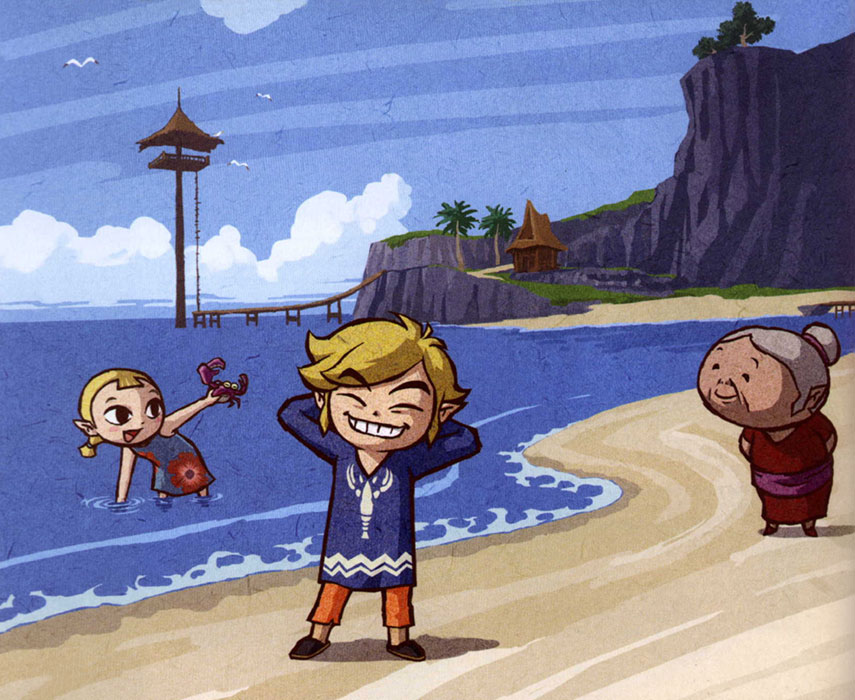
And what did they get instead? A vibrant, cheerful cel-shaded adventure featuring a cartoonish Link who looked like he’d stepped straight out of an animated film. The term "Celda" began circulating in forums and magazines as a derogatory jab. At the time, we simply didn't know how to process it.

Eiji Aonuma aptly explained at the time that this radical stylistic shift wasn't a creative misstep, but a stroke of genius: the cel-shaded look was essential for visually representing the wind and, above all, for giving Link lively, expressive facial features. He was proven right on every count.
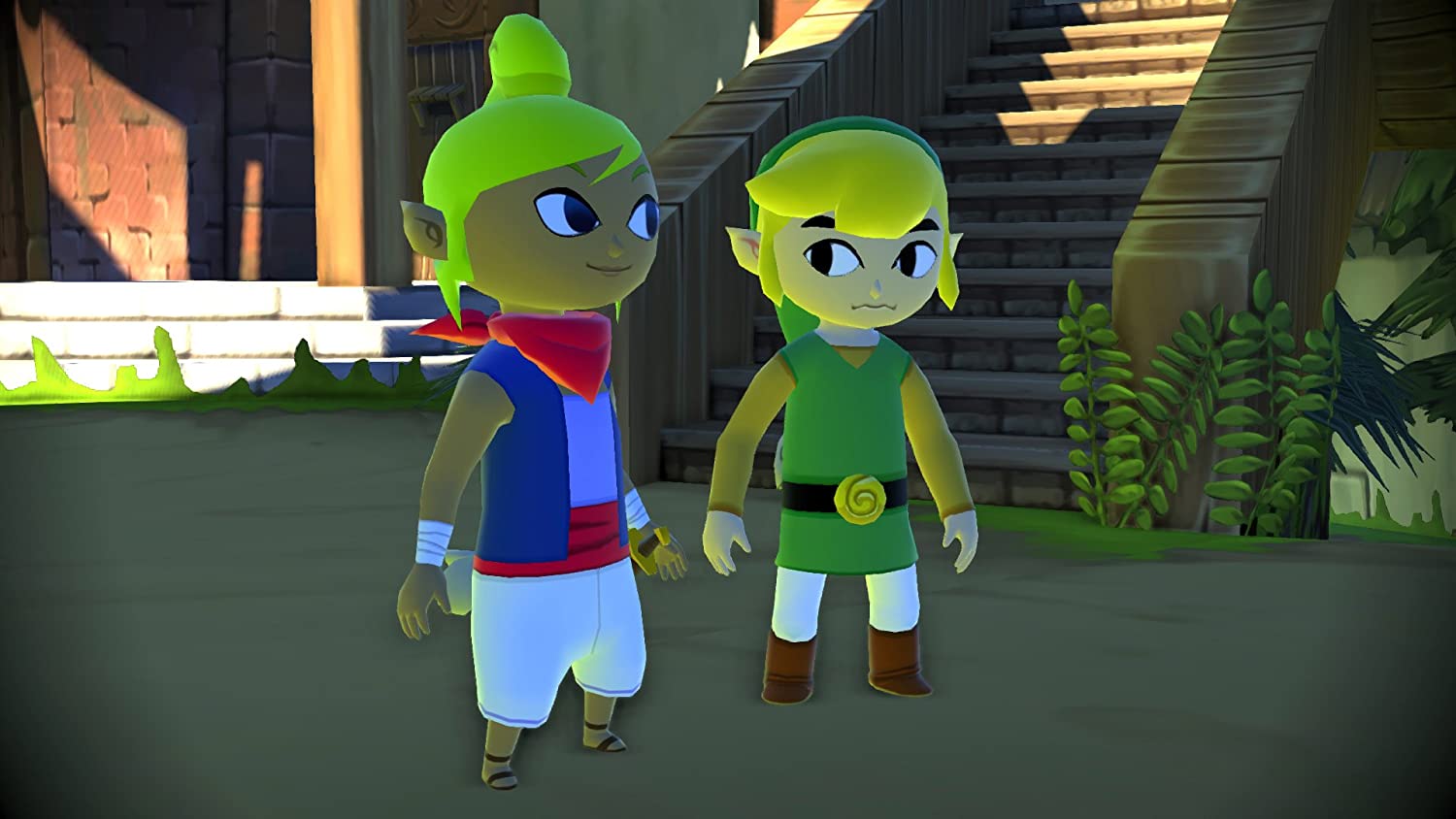
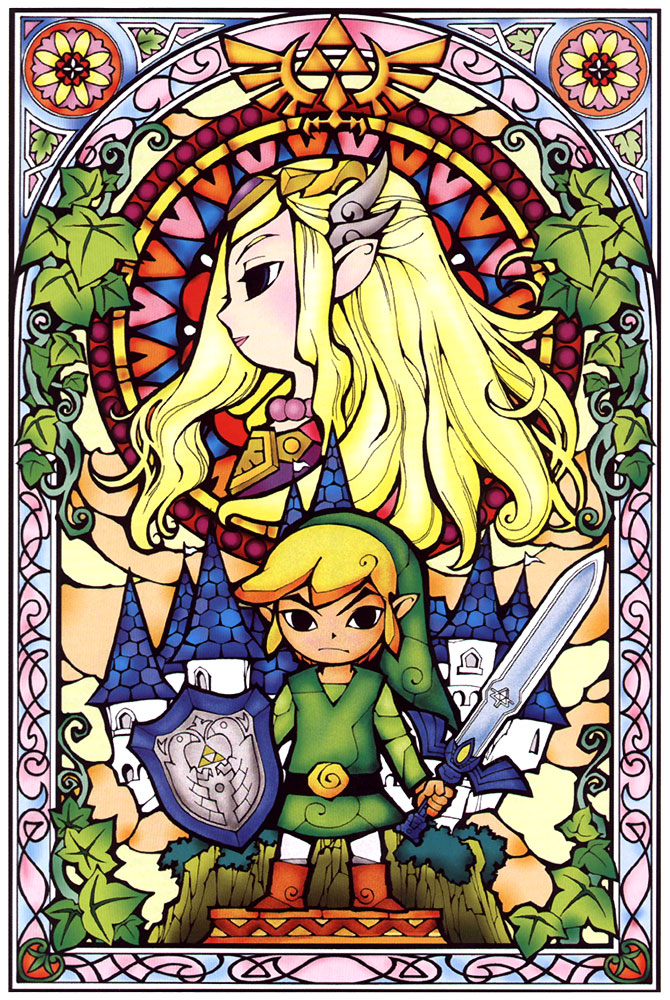 While Ocarina of Time and Majora's Mask on the Nintendo 64 were certainly pioneering titles with their static faces, The Wind Waker took character portrayal to a whole new level. Suddenly, you could see exactly what was going on in Link’s eyes: whether he was flinching in fear, completely awestruck by a situation, or rejoicing in a success, his emotions were crystal clear. The same applied to the fantastic supporting characters, who made the entire adventure feel far more alive than any game before it. This wasn't merely a technical generational leap; it was an artistic quantum leap. Looking at the game today, the magnitude of this triumph becomes even more apparent. It has aged absolutely phenomenally, lost none of its charm, and ranks among the best-looking cel-shaded games of all time. Its vibrant colors, clean animations, and lovingly designed game world make this classic shine on modern screens as if it had been released just yesterday.
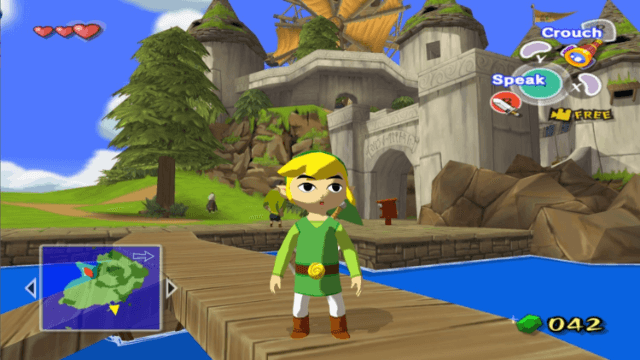
In terms of narrative, the game takes a fascinating path.
It makes direct reference to Ocarina of Time and is deeply intertwined with the legend of the Hero of Time. Ganondorf returns, and for the first time, we experience a Zelda title that consistently advances the mythology established by those past events.
The land of Hyrule has fallen and is long gone; instead of vast green plains, only smaller islands now rise from a massive, sprawling ocean. Sometimes these are larger isles featuring thriving towns and dungeons; other times, they are merely a solitary house, a few palm trees, or a dark cave. This wonderfully fresh pirate flair—spearheaded by Tetra and her crew, who appear early on to enrich the plot—lends the game a unique, unmistakable charm.
Wandering around, exploring the open sea, and uncovering secrets is simply incredibly fun.
At its core, the gameplay is classic Zelda, yet the mechanics have evolved significantly. While its direct N64 predecessors could feel somewhat slow, sluggish, and choppy at times—due to the limitations of the technology of that era—everything in *Wind Waker* flows seamlessly. Combat—including the brilliant, context-sensitive button mechanic—is incredibly fluid. Items are seamlessly integrated, and there is hardly anything more satisfying than picking up a sword dropped by an enemy in the heat of battle and immediately turning it against them.
 Then there is the wind, a central element: it is not only visible in the swaying of grass and sails but is actively controlled by Link using the conductor's baton to propel the ship across the waves.
The dungeons themselves—of which there are perhaps too few, with only around five major ones—feature solid, varied designs, with each taking one to two hours to complete. You might search in vain for a truly monumental "super-dungeon," and the sections involving companions have their pitfalls. Having to guide an NPC through a room and keep them safe while simultaneously solving complex puzzles can sometimes disrupt the flow of the game.
You might easily find yourself pulling out the baton and playing a short melody to take control for a few brief moments a dozen times or more within these dungeons. Nevertheless, the experience remains consistently strong thanks to excellent mechanics and a fantastic musical score featuring truly memorable tunes. Yet where there is so much light, there are unfortunately shadows, too—and that brings us to arguably the biggest...

One contentious point of the game lies in its final act: the infamous Triforce quest on the GameCube. This section is excruciatingly tedious—bordering on a design flaw. To assemble the Triforce of Courage, you need eight shards. However, you can’t simply stumble upon them; first, you must locate clues on the vast overworld map, salvage the corresponding charts, and then have them deciphered by the imprisoned NPC Tingle. And it comes at a price: a single chart sets you back a hefty 400 rupees.
Unless you’ve been diligently saving rupees throughout the game and secured the larger wallet early on, you’re faced with a massive grind. A staggering 3,200 rupees are required just to make all the charts readable.
It is an unbelievable, artificial obstacle that severely disrupts the game’s otherwise fantastic flow right near the end—thankfully, this fetch quest was significantly scaled back and made more reasonable in the later Wii U version.
At the time of this review, this game could be played as part of the Nintendo Switch Online plus subscription on the Nintendo Switch 2.
The HD remake has been released on the WiiU console - no port to any other consoles yet.
Rating
| Pro | Contra |
|---|---|
 ·Smooth gameplay
·Facial expressions ·Balanced |
 ·Triforce search
 |
 Despite this grueling final stretch, *The Legend of Zelda: The Wind Waker* remains an exceptional game. It has aged incredibly well; even years from now, we’ll still be marveling at its timeless visuals and charming presentation.
Diving into this colorful world is simply a blast: the difficulty is perfectly balanced (neither too hard nor too easy), the buttery-smooth combat system—featuring cool moves and the ability to pick up enemies' dropped swords—works brilliantly, and the spectacular final boss battle is the icing on the cake. Coupled with an engaging story that beautifully expands the lore surrounding the Hero of Time, it makes for an unforgettable adventure. Hats off to Nintendo—despite a few rough edges, it was an incredibly fun experience!
You are here: Main Page / Reviews / Zelda Wind Waker
1999 - 2026 Florian Auer. Contents written by me CC-BY-SA 4.0. Details: Copyright / Impressum. Version 13.5