

Final Fantasy Tactics - The Ivalice Chronicles

Nintendo - Tested in 2026 by der spirit
My Introduction to the Tactics Genre
Final Fantasy Tactics was originally released during a period when Squaresoft—back then, still without Enix—was experiencing arguably its best era. 1997 was a pivotal year: Final Fantasy VII brought the entire JRPG genre into the spotlight for millions of players in the West and Europe, and, alongside the original PlayStation, played a decisive role in the console wars against Nintendo and, in particular, Sega. A few years earlier, Squaresoft had delivered Final Fantasy VI—which, in my view, remains the greatest JRPG of all time—and the years that followed were a time when any role-playing fan could mark the release date of the next Final Fantasy in red on their calendar. Final Fantasy VIII leaned more into science-fiction fantasy, with its own distinct strengths, while Final Fantasy IX returned to a more classic fantasy style; to this day, many consider the latter to be one of the best—perhaps even the best—Final Fantasy title on the PS1.
In this context, Final Fantasy Tactics offers something entirely different: it is not a traditional role-playing game, but a full-fledged tactical strategy game.
The Story: Political, but Not My Kind of World
Honestly, I have less to say about the story here than with almost any other Final Fantasy game.
It revolves around kingdoms, betrayal, and a church that plays a surprisingly significant role—making it more politically charged than what one typically expects from the series. Much like Final Fantasy XII—which, ironically, is also set in Ivalice—the story has its moments, but it simply doesn’t feel like a classic Final Fantasy. It didn’t resonate with me nearly as much as entries VI through IX, and I have to admit that, at a certain point, I began using the fast-forward function to skip through many of the well-voiced cutscenes and dialogues.
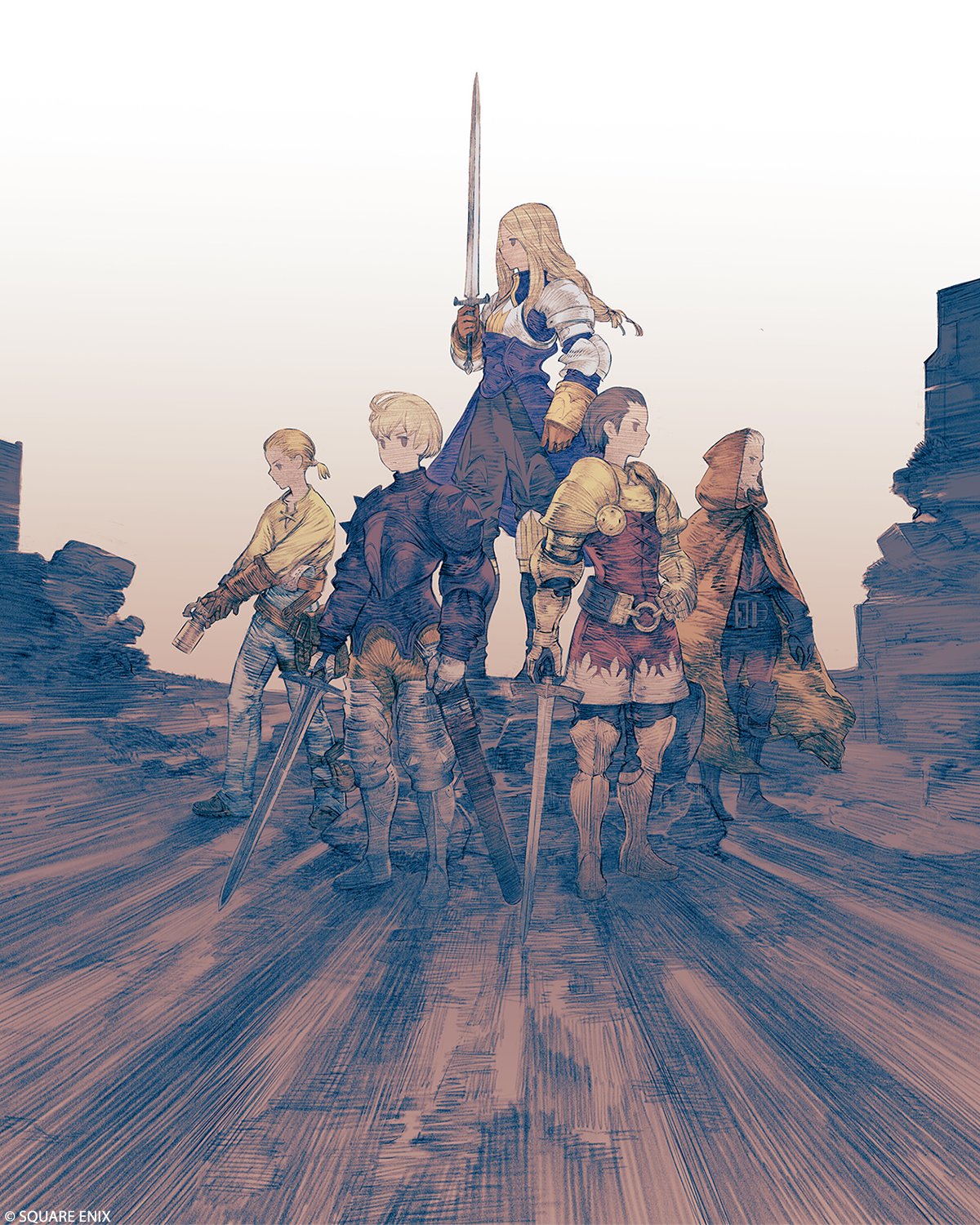
It just wasn’t the kind of fantasy world for me. Had the story reached the caliber of entries VI through IX, I likely would have given the game a significantly higher rating. The characters—including a few compelling adversaries—are exceptionally well-realized. In true Final Fantasy fashion, betrayal is a recurring theme, and it is through these dramatic twists that you assemble the team tasked with saving the world. As the story progresses, the fantasy elements become increasingly prominent, introducing hellgates, monsters, and demons. The Espers also make an appearance—though, unlike in the numbered Final Fantasy entries, they arrive without any formal introduction or backstory. They simply become available once the corresponding "job" is unlocked, and in battle, they deliver exactly what you’d expect: Bahamut unleashes his Megaflare, while Shiva conjures Diamond Dust. These additions bring greater variety to combat and make the job system even more engaging.
Gameplay and the Job System: The Real Star
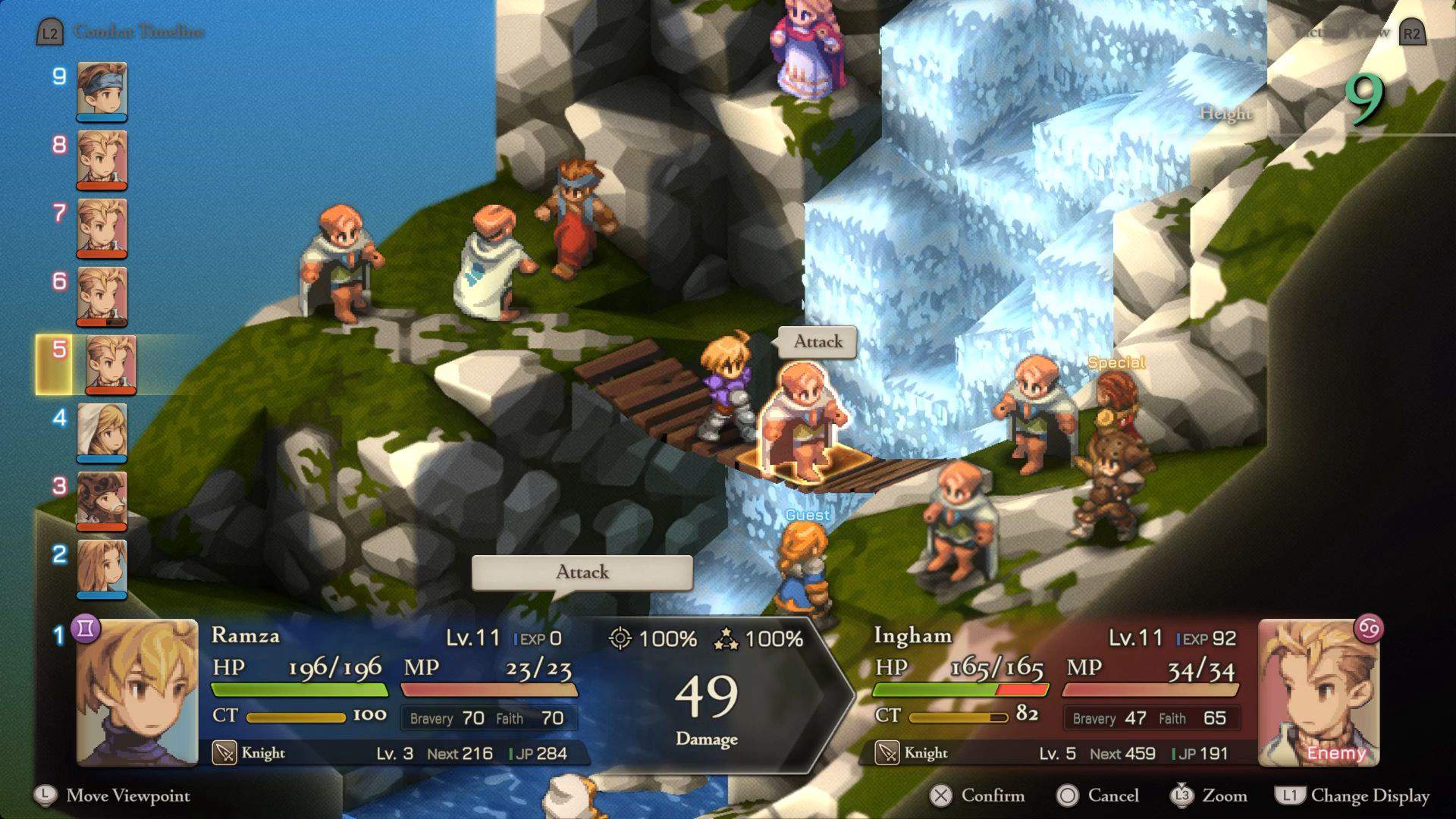
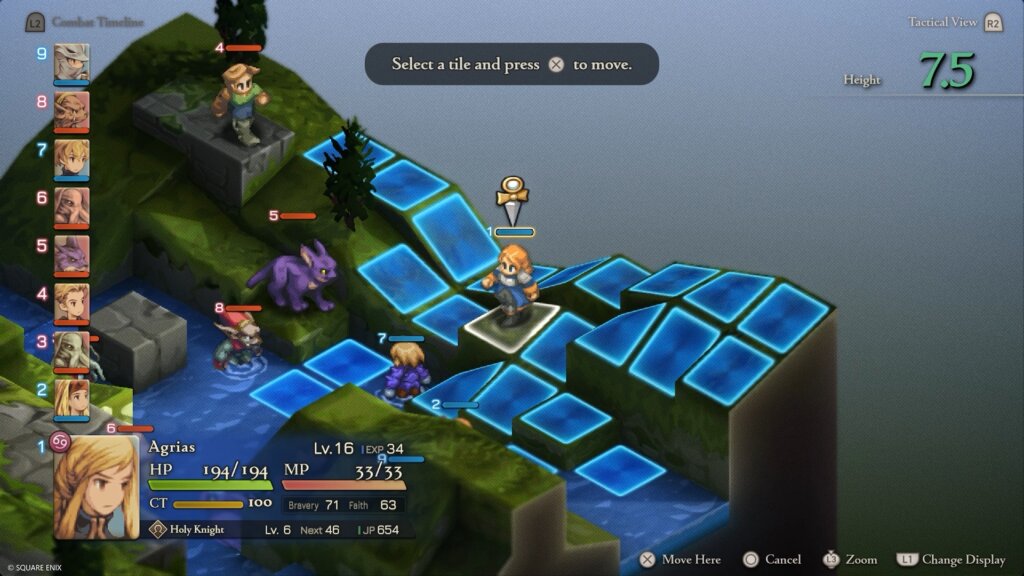
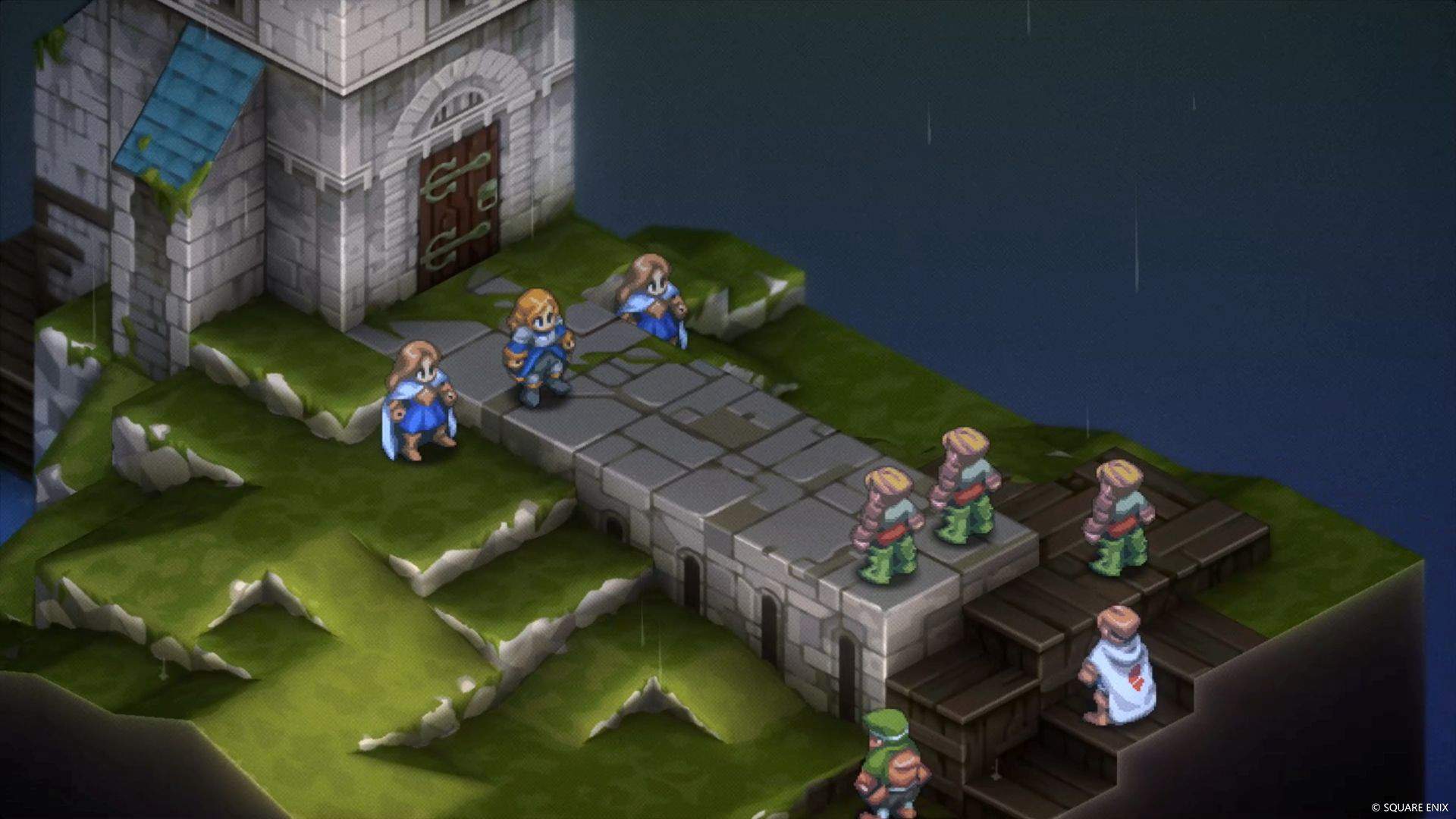
At its core, Final Fantasy Tactics is a tactical game. Before each battle, you select a team of up to five characters—sometimes bolstered by guest characters who fight alongside you. On a grid-based battlefield, each character moves a set number of squares and performs actions—ranging from standard attacks and item usage to white and black magic. There are also more specialized classes, such as the Geomancer, who leverages the environment to gain an edge, or the Bard, who uses songs to apply various positive or negative status effects.
Additionally, the game features classic roles like the Mage, as well as the Squire—a versatile starting class capable of equipping a wide array of armor and weapons.
The true genius lies in the job system: once a skill has been learned, it can be carried over to other classes using "ability points." This allows for deep customization—for instance, you could have a Ninja who wields dual blades in close-quarters combat while simultaneously utilizing Black Magic for ranged attacks, or you could equip reaction abilities—such as enhanced evasion—inherited from an entirely different class. It’s never just about sending five ninjas or five samurai into the field; it’s about assembling a team capable of holding its own against increasingly challenging groups of enemies.
This system is incredibly motivating—you always find yourself wanting to take on just one more battle to unlock the next ability, some of which can completely tip the game’s balance. "Sanctus," for instance—a powerful white-magic spell—can shred the HP of certain enemy types. You can never create a single "ultimate" character, as you’re always limited in the number of abilities you can equip, but that’s precisely what makes team-building so much fun. In my playthrough, I ended up with a squad of knights clad in heavy armor and wielding swords, capable of dishing out serious damage. By the final fifth of the game, I had become so powerful that only the final boss and one optional boss posed any real challenge; everything else was usually dispatched in three turns or fewer. Some might say I "broke" the game, but for me, that’s part of the appeal: the game actively encourages you to seek out those specific class combinations that allow you to tilt the scales in your favor.
Side Quests and Structure
In total, it took me about 35 to 40 hours to complete, though I didn’t tackle many side quests.
– really just the one where Cloud from Final Fantasy VII arrives in the world of Ivalice via a wormhole and becomes a playable character. The rest of the side content didn’t grab me, simply because this isn’t a classic JRPG with towns you can walk around in. Instead, you navigate between locations via a world map—without the ability to explore any towns—and the side quests essentially consist of reading snippets of text in a specific town or tavern, followed by a concluding battle. There are no puzzles, no meaningful choices—just simple clicking back and forth between locations that offer almost no gameplay interaction beyond visiting a shop or a tavern. That, for me, really broke the immersion.
Technical Aspects, Graphics, and Sound
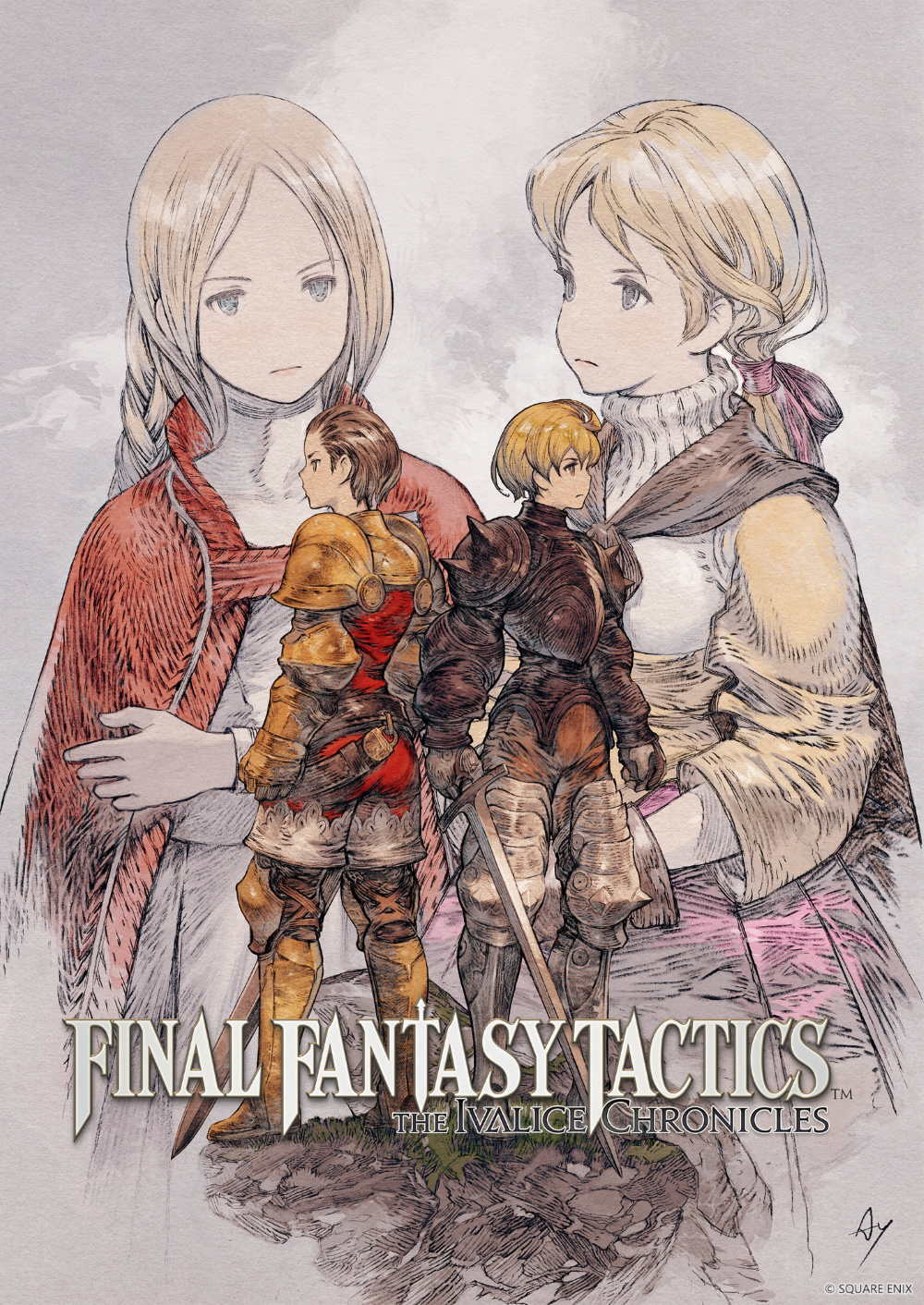
I played the Ivalice Chronicles Collection, which was released last year for Switch 2, PS5, and Xbox and includes the original game—you can choose whether to play the original or the remaster right from the start. I opted for the remaster, which features small but sensible improvements: save points after every dungeon battle, well-executed voice acting, and the aforementioned fast-forward function.
I also spent about an hour with the original version, but I find it difficult to enjoy today—not because of the graphics, which still hold a certain charm (and are well captured in the remaster), but because the gameplay itself feels incredibly sluggish. I’m glad I chose the remaster.
Graphically, it’s perfectly fine and does a good job of conveying that classic charm. In terms of sound, there are some truly standout tracks—most notably the theme that plays during team setup before every battle; it’s epic and motivating, much like Final Fantasy battle themes have always tended to be. The voice acting is highly professional and pleasant to listen to—no forced dialects, just the familiar, polished English-language style typical of the Final Fantasy series.
Rating
| Pro | Contra |
|---|---|
 ·Job System ·Voice cast |
 ·No sidequests |
 Final Fantasy Tactics – The Ivalice Chronicles is an incredibly engaging game. It was one of the few titles this year that kept me hooked for eight hours straight on the very first day; the job system draws you in immediately, and after every battle, you’re eager to distribute new experience points. The tactical combat also offers a refreshing change of pace for a Final Fantasy title—and for me personally, it served as an entry point into the tactical genre, despite having no prior experience with series like XCOM or Persona 5 Tactica. It opened the door to this genre for me, much like Hades once did for roguelikes.
To reach a "dream" score, the game would have needed a few improvements: a greater focus on a more compelling and epic narrative, more variety through side quests (which are entirely absent here), and better balancing. In certain chapters, some battles—such as those against a group of veterans or knights guarding a castle—can appear harmless at first glance, only for your party to be completely dismantled because the standard enemies don’t scale properly with your own level.
All in all, however, I thoroughly enjoyed the game. It’s a strong tactical title—one that is clearly well-regarded even by genre veterans—and for me, it marks the beginning of my journey into a genre I’m sure I’ll be exploring much more.