



Square Enix - Tested in 2026 by Thomas Nickel

Sometimes, simple things like timing can make or break the reputation of a game. Case in point: Square’s „Final Fantasy V“.
When it was released in Japan in 1992, the game was a breakout-hit, the first million-seller in the franchise and is a beloved adventure to this day – arguably more so than its famous sequel „Final Fantasy VI“. In the west, however, not so much.
You see, while most RPGs released in Japan reliably find their way overseas these days, western releases in the 90s were all but assured. Due to problematic timing, Square already passed on localized versions of the second and third 8Bit-entries in the series and when the hugely influental „Final Fantasy IV“ came to Super Famicom, Square lowered the difficulty markedly to make the game was approachable for American players (their European colleagues weren’t even part of the equation back then). The good reception of „Final Fantasy IV“ made the follow-up a certain candidate for a localization.
However… that did not happen. Where „Final Fantasy IV“ was a pretty straight-forward, linear affair, mostly defined by a storytelling right out of the pages of Shonen Jump (indeed, director Hironobu Sakaguchi regularly consulted legendary Jump-editor Kazuhiko Torishima to inject the game with some proper storytelling-juice), part 5 was more of a free-form affair. More jokes, less dramatic self-sacrifice; more systems-driven, less unexpected betrayals.
And even more important: „Final Fantasy V“ is a rather complex game. Complex – not complicated. But certainly a lot more challenging that its predecessor.
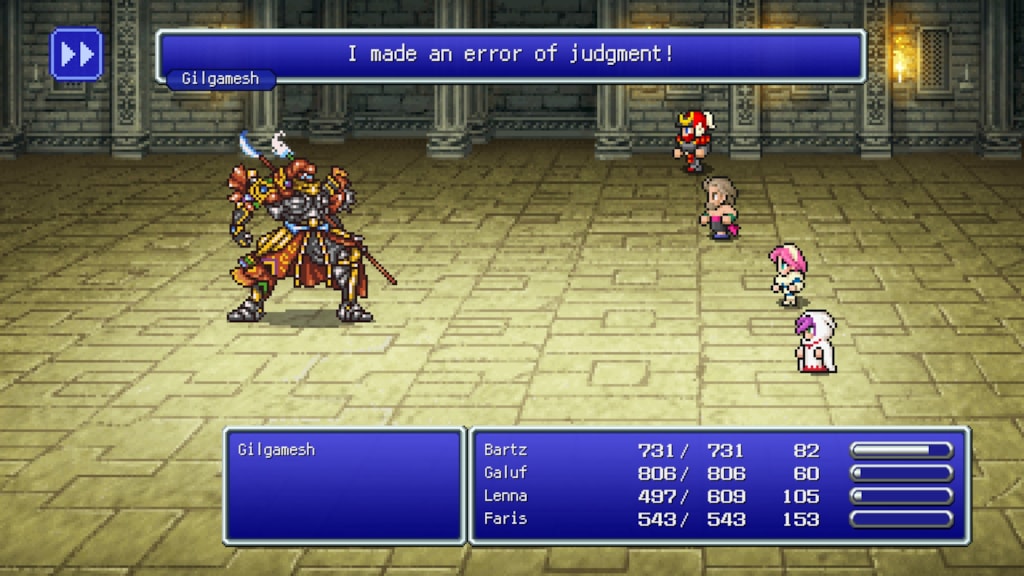
That put Square’s US-office in a complicated position… what to do with this rather unique game that the japanese players seem to love so much? There were plans for releasing it under the 90s-as-hell title „Final Fantasy Extreme“, there were plans to port it to PC and release it there… but none of these came to fruition and in the end the game was skipped entirely.
Instead Square brought Capcom’s „Breath of Fire“ to the United States and started localizing the next entry in the series: With impressively spruced-up presentation and a story that went all-out in terms of ambition, twists and melodrama, „Final Fantasy VI“ seemed a much better fit than its predecessor.
Looking back, all of these decisions make a lot of sense, and yet, they cemented the role of „Final Fantasy V“ as the „odd“ one. Some brave souls tried their hands on the japanese version and came away either thoroughly impressed or thoroughly overwhelmed, but the majority of players only got to see the game seven years later in 1999, when it was released as part of the „Final Fantasy Anthology“ for PlayStation.
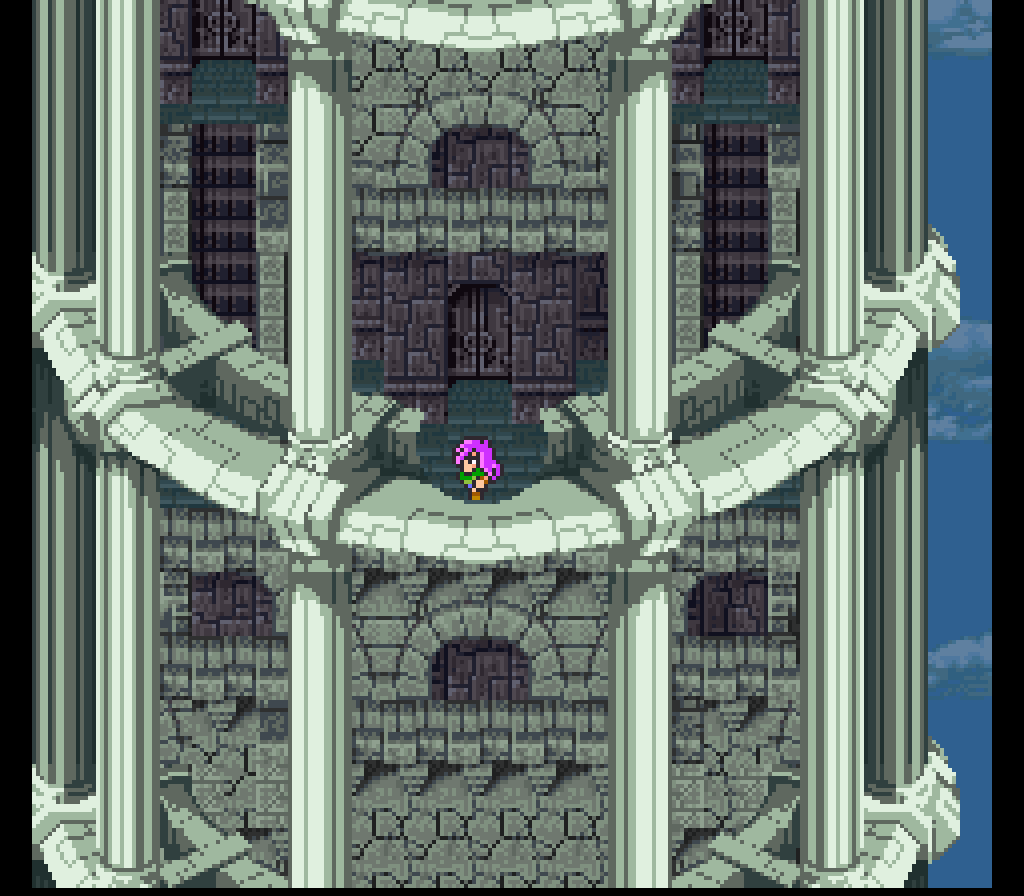
Their impressions at the time were… not good. Seven years in the 90s were an eternity and the game looked seriously dated when it finally came west.
The real problem, however, was the version released itself. The PlayStation-port was dramatically inferior to the Super-Famicom-release due to regular loading times and screen-transitions before and after every battle, making the game feel clunky and slow.
The localization was just as bad: Full of stilted phrases, questionable decisions like making party-member Faris talk like a reject from Talk-Like-A-Pirate-Day and obvious mistakes (like the monster „Wyvern“ became „Y-Burn“)… the once breezy 16-bit-game felt like a chore.
What was once a fast-paced, fun adventure that invited creative experimentation became a slog, a sad facsimile of its original release. Critics and players were rarely kind, what was once the „odd“ one, the „forgotten“, the „missing“ one, was now the black sheep of the series, wedged uneasily between the celebrated classics „Final Fantasy IV“ and „Final Fantasy VI“.
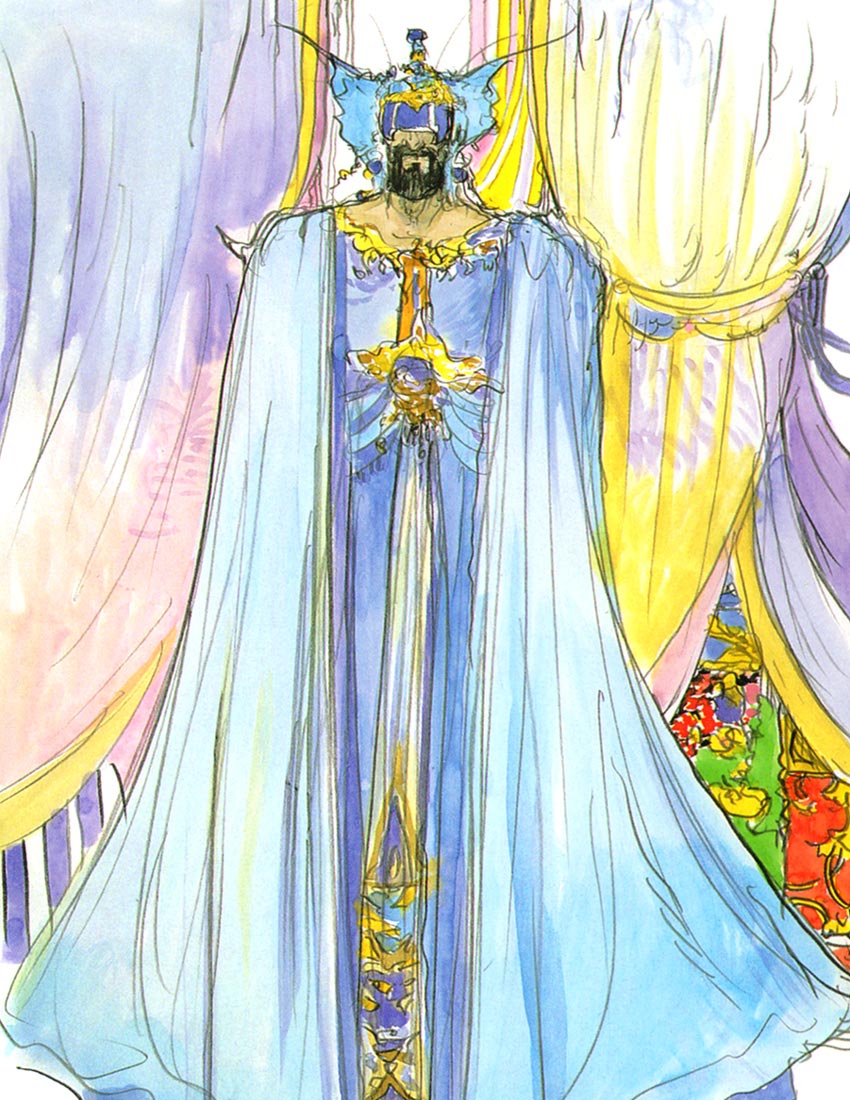
While the excellent translation-patch for the Super Famicom original, that was actually released to the public shortly before the US-launch of „Final Fantasy Anthology“ already helped a bit to repair the game’s bad reputation in the west, it took another seven years for the game to finally get the recognition it deserved:
It was „Final Fantasy V Advance“, a slightly enhanced and expanded port of the game to Game Boy Advance, that finally showed western audiences, what kind of game „Final Fantasy V“ actually is. The completely new localization not only in English, but also in German, French, Italian and Spanish, replaced the rough prior effort and with loading-times gone, the game finally felt as fast and dynamic as it had back in 1992 on Super Famicom.
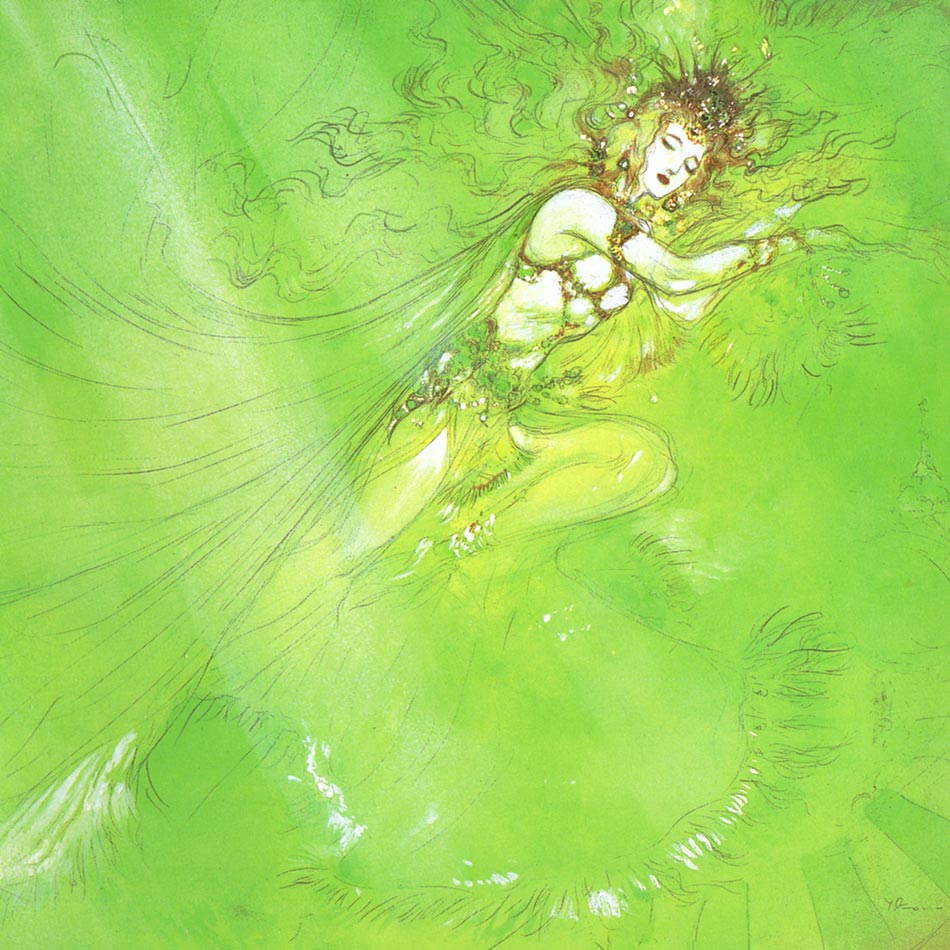
People played it, warmed up the the characters and enjoyed the incredible flexibility of the job system. Viral events like the yearly „Four Job Fiesta“ (people all over the world play through the game with randomly assigned jobs and collect money for a good cause) and many guest-appearances by everyone’s favorite series anti-villain, the fun and boisterous Gilgamesh, also did their part of reestablishing the games status and restoring its reputation.
And while „Final Fantasy V“ is still overshadowed by crowd-pleasers such as „Final Fantasy VI“, „Final Fantasy VII“ oder „Final Fantasy X“, thankfully nobody would consider part 5 a black sheep anymore.
Indeed, the game is not only lauded as an incredibly fun and versatile adventure that allows for countless tactics and approaches, it also has an important part in the series’ history!
It was the last game that was helmed by Hironobu Sakaguchi as a creator. It was part of the gameplay-basis for the amazing „Final Fantasy Tactics“ and it was the first game where later stars like Yasunori Mitsuda and Tetsuya Nomura were actively involved and credited in creative roles. And, as mentioned before, it was the series’ first million seller, that gave the company and the creators the needed boost to tackle huge, narratively ambitious projects like „Final Fantasy VI“. And it’s still a damn fun game in its’ own right.
Editor's note: As a guest article with its own style, this review does not have a numbered score.
You are here: Main Page / Reviews / Final Fantasy V
1999 - 2026 Florian Auer. Contents written by me CC-BY-SA 4.0. Details: Copyright / Impressum. Version 13.5